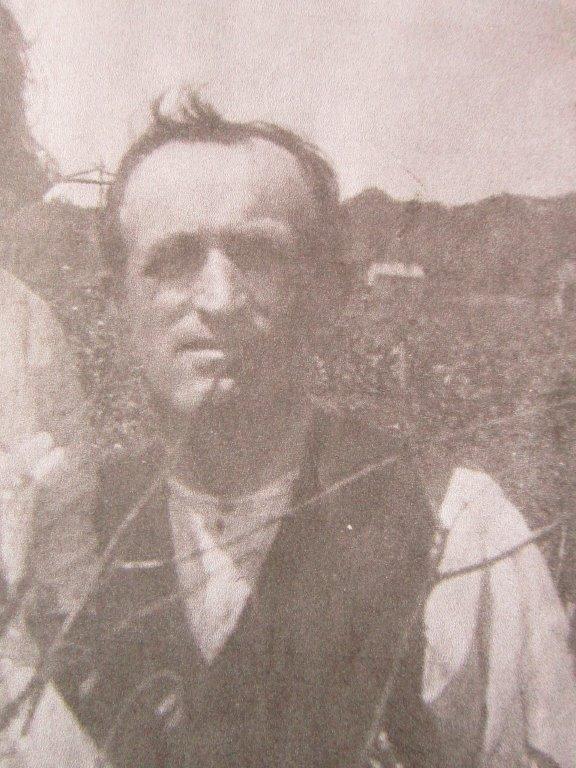
Family History
Date Of Birth: 14/02/1888
Date Of Death: 18/10/1926 (Age 38)
Father
Arthur Henry Smith
DOB: 1863
Wymondham, Norfolk
Shoe laster/foreman bootmaker
Married:1883 in Norwich
Mother
Susannah Golden
DOB: 1862
Norwich
Wife
Maude Susannah Chaney
DOB: 14/08/1887
Married: 16/11/1911
DOD: ??/08/1933
Her father was George Chaney born 1856 in Tivetshall, who was a "Carman" which is a driver of a horse drawn vehicle delivering goods possibly for a railway company, he was married to Susannah Cottrell in 1875, she was born 1858. George married again in 1898 to Ellen Buxton, she was born in 1859 in Great Witchingham, and they went on to have two children, neither of whom survived.
Brother
DOB: 1890
DOD: 29/10/1918 (Age 28)
Son's
Maurice Frederick George Smith
DOB: 06/07/1914
DOD: 26/11/1971
DOB: 04/02/1916
DOD: 21/05/1964
Daughter
Bertha Maude Smith
DOB: 07/10/1919
DOD: 26/07/2011
Other information
Residence: 61 West End Street, Norwich
Trade: Clicker - a person who makes the upper parts of leather boots and shoes
Frederick was one of 12 children, but by the time of the 1911 census five of those had died
According to the probate register when he died he left £271 18s to his wife Maude Susannah
Military History
The time line and associated information below has been gathered from Frederick's service record and the war diaries of the battalions he was posted with.
Unfortunately, during the Blitz, the warehouse in which most WW1 records were stored caught fire and most were destroyed. As can be seen by the images below my great-grandfather's record shows typical fire damage so some parts are very difficult to read. All records were microfilmed many years ago and the originals can no longer be accessed as they are out of bounds due to their poor condition.
24/06/16 |
Date deemed to be enlisted (conscripted) |
23/11/16 |
Medical checkup - according to his service record his medical classification at this time was A which is "Able to march, see to shoot, hear well and stand active service conditions." Height: 5 feet 3 1/2 inches Weight: 103 lbs (7.3 stone) |
15/02/17 |
Called up for service Age 29 |
30/04/17 |
Embarked Folkestone, UK Disembarked Boulogne, France |
30/04/17 |
Posted to Northamptonshire Regiment - 6th Battalion Service Number: 32355 Rank: Private |
30/04/17 |
Transferred to Northamptonshire Regiment - 7th Battalion
War Diary entry from this period - "A fine day. Companies began training in Bayonet Fighting, Physical Training and Musketry. B Company bathed." |
01/05/17 |
Joined 17th I.B.D. (Infantry Base Depot) in Calais
War Diary entry from this period - "Fine. Company training." |
24/05/17 |
Transferred to Royal Welsh (Welch) Fusiliers - 9th Battalion Service Number: 56346 Rank: Private
War Diary entry from this period - "May 19th - 24th Training at ZOUAFQUES (Drafts totalling 142 arrived)" |
06/06/17 |
Field - Weston Camp, France
War Diary entry from this period - "June 6th A+B companies in Weston Camp and C+D coys in line. A+B companies moved up to line at 8-30pm to positions of assembly. Assembly was complete by 10-30pm" |
11/12/17 |
Admitted to No 2 Rouen General Hospital (British Red Cross) with blistered feet |
13/12/17 |
(ADM) Assistant Director Medical Services diagnoses marching feet |
27/12/17 |
45 CCS (Casualty Clearing Station) at Achiet-le-Grand sent to hospital with blistered feet |
27/12/17 |
57 Field Hospital (Marseilles) a.k.a. Western General Hospital - admitted with marching feet |
17/01/18 |
Joined C Base Depot at Rouen |
20/02/18 |
Re-joined Royal Welsh (Welch) Fusiliers - 9th Battalion The unit was a part of 58 Infantry Brigade of 19 Division. |
16/03/18 |
Granted leave to the UK |
23/03/18 |
Captured at Beaumetz (a small village in France which was captured by the enemy 22.3.18)
An extract from the battalion war diaries for this period can be found below
Place of detention was Gefle Münster II (Rennbahn) - which was one of four prison camps in Münster, Westfalen. It was a hutted camp constructed on the race-course (Rennbahn in german) with an administration building in the grandstand. There were four blocks of wooden barracks to hold prisoners, each block consisting of 22 dormitory rooms capable of holding 200 men each. The camp population varied from 4,000 prisoners (300 of them British) in the earlier days, increasing to as many as 10,000 towards the end of the war. Most men slept on the floor with a straw mattress and two blankets. They were given coffee in the morning, barley and potatoes for dinner and maize soup in the evening. Prisoners were allowed out of doors every morning for one hour's recreation. The internees worked in the camp itself, or in coal mines (Augusta Victoria coal mine and coke works) or in agriculture. The men worked to improve the camp, later producing its own coins, and men could buy sausage and condensed milk from the canteen. Parcels from England were received but some items, such as alcohol, matches, candles and even compasses were confiscated.

The following are words written by Frederick, supplied by a family member:-
"I was captured at 6pm in the evening of Saturday 23rd March 1918 at Bertincourt, slightly wounded in the left ankle. Was taken by field ambulance to hospital Denain and left there at 5pm on 25th March. Arrived at Gonde was inoculated and got to bed. Roused at 4am on 26th March and sent back to Denain, slept in a church, left at 2pm for Munster. Arrived Friday 29th at 9.30pm - a shocking journey, very hungry, tired and dirty in a cattle truck. Left Munster May 24th for Bismark, started work down a mine at 5am in the morning till 1pm. Back again at 9pm at night till 5am Sunday morning. Worked 16 hours out of the first 24 in the mine"
Below are the POW records held by ICRC (International Committee of the Red Cross) relating to Frederick
|
 Click to open  Click to open  Click to open |
|
03/05/18 |
Wife forwarded postcard from solider showing POW since February - postcard written 25/03/18 |
29/08/18 |
War Office - officially accepted as a prisoner of war in Germany from information compiled and identified from official German Lists provided by Geneva Red Cross 13.5.18 |
30/11/18 |
Repatriated British Prisoner of War at Hull per S.S. Archangel

The ARCHANGEL (Official No.123940) was a 2,448-ton passenger ship built by J. Brown & Co., Ltd., Clydebank, Glasgow in 1910 and launched as the ST. PETERSBURG for Great Eastern Railway Co., Harwich. She was powered by two steam turbines that gave 20-knots.
In 1915 she was renamed ARCHANGEL and used to carry troops between the UK and Russia
In 1923 she was registered to London & North Eastern Railway, Harwich
The ship was bombed on 16 May 1941, in position 57 55'N 02 03'W, and beached off Black Dog, 5 miles south of Newburgh, while voyaging from Kirkwall to Aberdeen, with troops & equipment. She was written off as a total loss.
|
02/12/18 |
Returned to RWF Depot (Home Service) to await demob |
05/12/18 |
Wife notified of repatriation by embarkation officer |
01/01/18 |
Letter sent from previous employer (Hale Bros of Westwick Street, Norwich) confirming they would offer Frederick employment immediately upon his return to civil life |
03/01/19 |
Contacted R.W.F. regimental depot at Shrewsbury advising that as a repatriated prisoner of war he would like to take up civil employment again with his employer before the war |
21/01/19 |
Letter sent from previous employer (Hale Bros of Westwick Street, Norwich) confirming they would re-employee Frederick Smith "as he is a very useful man" |
26/01/19 |
Granted 28 days further furlough (leave) so he could return to civil life and his previous employer |
Extract from Royal Welsh (Welch) Fusiliers - 9th Battalion War Diary
The following is an extract from the war diaries covering the period that Frederick was captured:-
Narrative of Events from 21st March 1918 to 23rd March 1918
21st March:-
The Battalion was in HERRICK CAMP between HAPLINCOURT and BERTINCOURT. The Enemy barrage opened about 5.0am on the Front Line. At 7.0am the Transport Lines just west of BERTINCOURT were heavily shelled and several men and mules hit. Several direct hits were registered on the Quartermaster’s Stores resulting in a loss of the stores.
The Battalion “stood to” at 5.0am and awaited orders until about 11.30am when a move was made to assembly positions in GAIKA COPSE, west of the VELU WOOD.
The neighbourhood of this position was heavily shelled during the morning and early afternoon.
At 4.30pm orders were received to move up and dig a new line on the BEAUMETZ – HERMES ridge.
The 9th Welch Regt: dug on the Right and the 9th RWF on the Left and the 6th Wiltshire Regt: in Support.
This Line was partially dug by 9.30pm when orders were received to rest the men as much as possible as another move was impending.
At 10.30pm orders were received to move back behind the crest on which trenches had been dug and await further orders for a move.
22nd March:-
At 12.30am on the 22nd orders were received to move to the Cross Roads at I.28.b.6.3 (Map Sheet 57c N.W.)
This move was completed by 4.0am and the Battalion was accommodated in a hut Camp at this point.
At 9.30am orders were received to move forward and dig a new line covering the two ridges in I.10 and I.11 about 500 yards South West of the village of MORCHIES. The 6th Wiltshire Regt: digging a line down the road running due South from MORCHIES to the BEETROOT FACTORY at I.17.d.
This line was dug in without trouble by 1.0pm and Battalion H.Q established in the road at I.17.a.5.7. Three companies were in the front line and one in Support. The Wilts: H.Q. were established in the same place.
A Battalion of Cheshires in the 25th Division were dug in 200 yds behind the line taken up by this Battalion and their Battalion H.Q. were in position at the same point as ours. Touch was maintained on the Right with 6th Wiltshire Regt: but no connection could be secured with any troops on the Left flank.
Two Companies of the 9th. Welsh Regt: were at, about 2.30 pm, thrown in on the Left flank to endeavour to get into touch with any troops who might be in the neighbourhood.
At about 2.30pm the enemy could be seen massing in large numbers on the high ground between VAULX and MORCHIES.
It appeared at that time that some of our troops were in positions North and West of MORCHIES and the 1st Liecesters subsequently withdrew through our lines. The enemy developed a heavy attack about 3.30pm along the whole of the front occupied by this Battalion which was beaten off at all points with much loss to him.
Cavalry could be seen on the high ground before mentioned in support of this attack.
A counter attack with a large number of tanks was started by us about 5.0pm which was supported by two Coys: of the 9th Welsh Regt: These Coys: failed to materialise but one Coy: of the Cheshire Regt: (28th Division) ultimately supported the tanks.
The enemy was driven back over the line of the MORCHIES VAULX Road by this counter-attack and could be seen fleeing up the high ground North of this Road.
Many tanks however were knocked out and at dusk the enemy again crosses the line of this Road.
A Battalion of Royal West Kents and a Battalion of the Queens West Surrey Regt of the 41st Division came up after dark and the line was reorganised as follows :-
The R W Kents relieved the two Companies of the 9th Welsh Regt and left the Coy: of the 9th R.W.Fus: with four Companies, their line running approximately from I.9. Central to I.10. Central.
Three Coys: of the 9th R.W. Fus: from I.10 Central to I.11.b.6.g (one of these Coys: having relieved the left Coy: of the 6th Wiltshire Regt:).
The 4th Coy: of the 9th R.W.Fus: in support in I.11.b.6.g to the BEETROOT FACTORY in I.17.d.
The Queens relived the Cheshire Battalion previously mentioned and the Cheshire Battalion dug a new line from the BEETROOT FACTORY in I.17.d to Battalion H.Q. at I.17.a.5.7.
Another Brigade of the 41st. Division were to continue the Left Flank of the R.W. Kents but this Brigade appears to have lost its way in the dark, at any rate the Left of the R.W. Kents was reported during the night to be in the air.
During the night of the 22nd/23rd March 6 prisoners and one machine gun were captured by the 9th R.W.F by patrols.
23rd March:-
Consolidation was continued during the night 22nd/23rd and the early morning of the 23rd.
At 7.0 am on the 23rd: the enemy opened a heavy bombardment on the 6th. Wilts: front and the troops in front of them were seen coming back although no attack actually developed on the 6th. Wiltshire Regt.
During the whole of the morning of the 23rd. the enemy could be seen massing on the VAULX MORCHIES high ground and moving in a S.W direction. The whole area was very heavily shelled, particularly Battalion H.Q., and no connection was possible either with the Companies or Brigade except by runner or pigeon after about noon.
At about noon reports were received that the right Flank of the 6th Wiltshire Regt: was in the air.
This news with various other information and a request for Artillery support was sent off by pigeon.
Orders were received about noon by runner from Brigade that the line would be withdrawn after dark to the Green Line west of BEUGNY.
A conference of the 5 Commanding Officers was arranged and it was decided to endeavour to support the Right flank by throwing out two Companies of the Cheshire Battalion to make a line of Posts from the BEETROOT FACTORY in a S.W. direction.
This was done without opposition in the first place but it subsequently appeared that the enemy were working round the flank of these posts. At 3.15 p.m. orders were received from the 58th Brigade to withdraw in small groups to a line round East and N.E. of BEUGNY.
The 41st Division had received no orders to withdraw and it was obvious that we could not withdraw without involving them. The 5 Commanding Officers again conferred and orders were sent to all Companies to withdraw at once.
The shelling at this time had become most intense on Battalion H.Q. and it subsequently transpired that no runner got through to Coys: with this message.
Various attempts were made with Battalion H.Q. staff to form a defensive flank but all these attempts were completely wiped out by the enemy barrage.
The remaining two Coys: of the Cheshire Battalion were also practically wiped out by the same barrage.
The Battalion H.Q of the 6th Wiltshire Regt: 9th R.W.Fus: and the Cheshire Battalion came away at 5.0pm after it became obvious that Companies were endeavouring to withdraw, but very few managed to get through the barrage and undoubtedly many
Officers, N.C.O’s and men were captured in the Battalion H.Q. Dug out.
By 5.0pm the enemy had worked up the BAPAUME-CAMBRIA Road practically to BEUGNY and it appeared from his Machine Gun Fire that he was established on the high ground in I.10.a
Accurate information as to times, etc: cannot be given as escape seemed so impossible that all papers, etc: were burned before leaving Battalion H.Q. at 5.0 pm.
The Green Line was reached at about 6.30 pm and all available troops were reorganised.
The 9th R.W.Fus: were then about 60 strong with 9 Officers. A line was consolidated behind the Green Line in I.20.a. by the Battalion. No further attacks took place that night.
~ ~ ~ ~
The casualties of the 9th R.W.Fus: during the period were:
Officers:
Killed 3
Wounded 5
Wounded & Missing 3
Missing 3
Other Ranks:
Killed, Wounded and Missing 446 (The greater part of whom were missing)
Notebook
Below are some images and extracts from a notebook kept by Frederick William Smith around the time he was captured and sent to the POW camp.
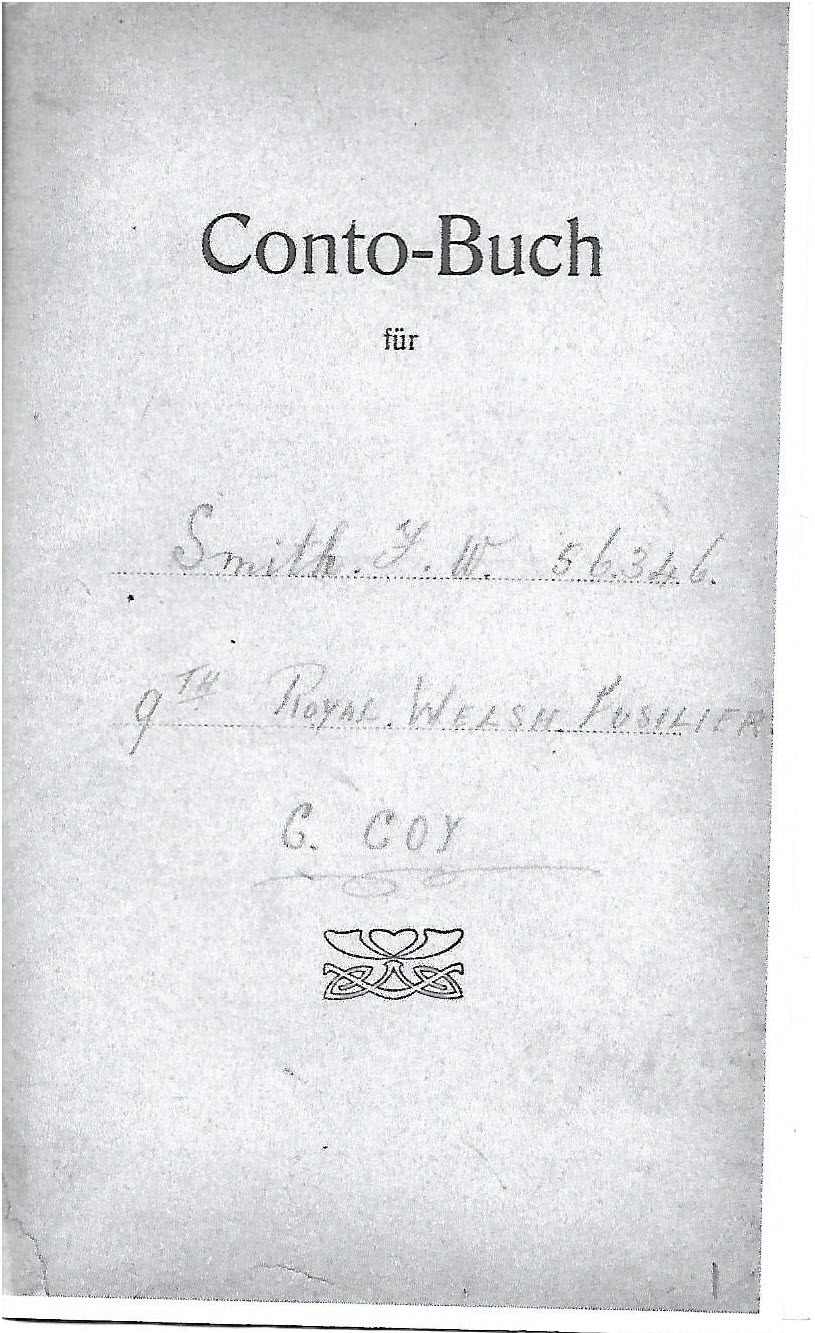
Click to open
Conto-Buch fur Smith F W 56346 9th Royal Welsh Fusiliers C Coy

Click to open
Captured 6 oc in the evening Saturday March 23rd 1918 at Bertincourt.
Slightly wounded in left ankle.
Arrived at Field Denain by Ambulance 8.30 am 24th.
Left Denain at 5pm 25th arrived at Gonde 9.30 innoculated, got to bed 12.00
Roused 4am 26th & sent back to Denain slept in a church left 2 oc pm for Munster arrived Friday 29th at 9.30 am a shocking journey very Hungry, tired & dirty in a cattle truck.
Left Munster May 24th for Bismark started work down a mine at 5oc in the morning till 1 oc. Back again at 9 oc at ....

Click to open
…. night till 5 oc Sunday Morning 16 hours out of the first 24.
Francis William Ellis, Mount Pleasant, Wedhampton, W Devizes, Wilts
Pte E. E. Best, 7 East Kent Regt, Windmill Hill, Wrotham Heath, Wrotham, Kent
William Frederick Last, 23 Bruce Road, Bow, E London, Essex Regiment 13th Batt
George Moore, 6th Wilts, Jews Road, Southwell, Notts
William Frederick Last, 13th Essex, 23 Bruce Road, Bow, E London
Frank Horton, 9th R W F. 32 George Street, off Newbridge Lane, Stockport, Cheshire
Rowland H Lyon, 65 Hatherley Rd, Walthamstow E
The Hospital for Women, Johns Square, London W
Chas Mau……… 8 Border, 10 Deramore St, Rusholme, Manchester

Click to open
William Davies, 9th R W F,3 Sunnyside, The Hyde, Hendon, London, NW9
Dec 2 £2. 10. 0 at Rippon
Regimental Pay
[See image for figures]

Click to open
July 14th Received Clothing Parcil containing Overcoat Cap and Kitbag
Aug 3rd received Shirts Pants Gloves Suit Boots Handkerchiefs Cardigan Sox

Click to open
Summary of Parcils Received
[See above image for details]

Click to open
Pay Roll
June 23 First Pay 11 marks
July 6 Second Pay 10 marks
July 21 Third Pay 23 marks
Aug 22 Fourth Pay 32 marks
Sept 20 Fifth Pay 9 marks
Oct 28 Sixth Pay 24/30 marks
Finish Arbeit (Work) Nov 18th

Click to open
Pitt 2
Pitt Number 2464
Medals
British War Medal and Victory Medal


Images

Index Card - Click to open

Service Record - Click to open

Service Record - Click to open

Service Record - Click to open

Service Record - Click to open

Service Record - Click to open

Service Record - Click to open

Service Record - Click to open

Service Record - Click to open

Postcard To Mother - Click to open
References
British Army WWI Service Records, 1914-1920 - https://search.ancestry.co.uk/cgi-bin/sse.dll?db=BritishArmyService&indiv=try&h=1841653&requr=281775630745600&ur=0&lang=en-GB
UK, WWI War Diaries (France, Belgium and Germany), 1914-1920 - R.W.F. 9th Battalion https://search.ancestry.co.uk/cgi-bin/sse.dll?indiv=try&db=UKWarDiariesWWI&h=639283 (page 199 day arrived, page 283-285 time of capture)
Family Tree - https://www.ancestry.co.uk/family-tree/person/tree/7735987/person/-1045182627/story
Forum - https://www.greatwarforum.org/topic/264151-researching-my-great-granddad-frederick-william-smith/
The Long, Long Trail - https://www.longlongtrail.co.uk/
ICRC (International Committee of the Red Cross) Historical Archives for POW - https://grandeguerre.icrc.org/en/File/Details/2921450/3/2/