As the Merlin engines fired up with a spit and splutter, the smoke ejecting out of the exhausts you could sense the feeling of power this beautiful aircraft had, and that something special was about to happen. I watched in awe, as the tricky aircraft to handle on land gently lifted with its thrust of power as it rose up into the cloudy but blue skies where it could really perform, where it was at home, where its true class could shine, and where its history forever lives on.
A gently flick to one side and you could see the sun glimmer across the wing tip. Today it was carrying a very special person. With the sun bursting a ray of light through a contrast of both broken dark and light fluffy clouds, a glimpse of a second and third magnificent aircraft could be seen accompanying this most special flight, "wonderful" were the words spoken in obvious excitement. In the passengers eye I could see those many years come back to the forefront of her mind, memories of time all flooding back only seeming like yesterday being up there all alone on vital missions.
I was watching the Spitfire flight of a most special lady Mary Ellis, celebrating her 100th year. I found myself being intrigued about the life she had led and was drawn to reading her wonderful memories in her autobiography. Throughout the war years and indeed her life there seemed a determination and willingness to give all for the cause; I was therefore inspired to write a section dedicated to both the men and women that served in the ATA (Air Transport Auxiliary) during the second World War.
At the start of the second World war the concept of ladies flying was certainly not new. In fact, many had been doing so for years prior to this and pioneers such as Amy Johnson were certainly household names with their daring adventures. Amy Johnson would also in fact join the ATA in 1940 and would sadly lose her life during one of the flights.
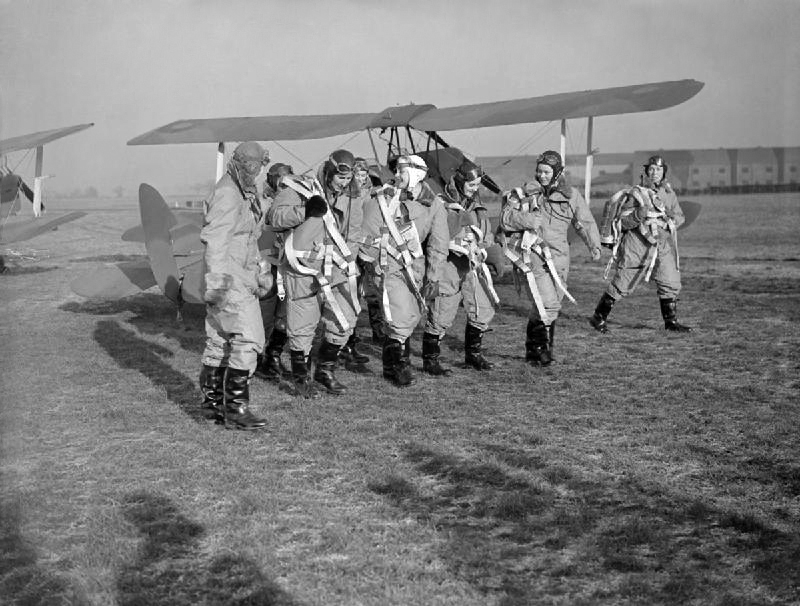
Initially the ATA was formed by Gerard d'Erlanger with a selection of male pilots, but this was soon to change when Pauline Gower began a push to recruit quite capable and experienced female pilots. This would set the scene for a period of change and would enable many more ladies to fulfill their flying ambitions and take to the air to play their vital role in the war effort, and would also see them for the first time ever being rewarded in equal pay to their male colleagues. Without the work of the ATA both male and female alike many a plane would not have made it to the front-line ready for combat, or even be repaired ready for another battle in the sky.
Click to open
© Daventry BJH, Royal Air Force official photographer, Public domain, via Wikimedia Commons
Initially flying aircraft such as the Tiger Moth, they would go on to ferry numerous aircraft ranging from the Spitfire to the Lancaster. They carried out their duties fearlessly stepping into aircraft they had never flown before without major instruction only handling notes (Ferry Pilots notebooks) and entered into the skies where an enemy could be lurking at any moment. They had no radios, or navigational aids, no weapons to protect themselves they were alone high above the rolling hills of the beautiful English land.
So, with their maps, compasses and trusty Ferry Pilots Notes, they traversed the open, sometimes stormy and wintry skies. Danger could lurk at any moment and they were ever conscious of the dreaded barrage balloons which could be raised at any time without warning, a protection to the cities but a menace if struck by the allied pilots.
The weather was a constant threat in itself with low lying fog disguising the hidden dangers of the English hills, valleys and mountains, let alone the cruel harsh winters but they would battle on, even when flying the open cockpit aircraft with limited protection against that biting chill of the air. Each trip would rely on the guidance of the MET and if they were safe to venture out. Stray off route and you were in danger of being in the line of sight of anti-aircraft guns.
They had the utmost respect for the aircraft they were flying not only in terms of the monetary value but most important the value to the RAF and those pilots who would be taking to the sky in combat to save the country. They heavily relied on the aircraft and thanks to the valiant effort of both the men and women of the ATA they delivered.
The ATA was still predominately male orientated with a number of pilots being veterans from the Flying Corps of World War One, many were also carrying the scars and injuries from that terrible time. There were also various nationalities who would join. So male or female everyone was involved in this vital ferrying aircraft role.
Although not a combat role unlike some of the Russian lady pilots fighting the Germans across Europe it was still a dangerous job. Sadly, there were losses and the heart could feel and of course it undoubtedly did but the eyes could not shed a droplet of water in public anyway as they were a generation of the stiff upper lip, and a country at war, it was the only way our nation could have the strength to power through.
However, as the war began to draw to a close by November 1945 the ATA would cease and all those concerned who had given their all and had led a life of thrill, excitement and fear would seek different paths in the journey of their lives. Their work in constantly supplying planes which in turn freed up other pilots for combat was a vital act in us achieving victory. We owe them the greatest respect and honour.